

Walking vs Running for Weight Loss: Which Is Better for Beginners?
For most beginners, walking is better to start with because it is easier, lower impact, and more repeatable.
Running can burn more energy in less time, but walking is often safer and easier to stay consistent with long term.
If you are trying to lose weight, you may wonder:
Should I walk?
Should I run?
Will walking be enough?
Is running faster for results?
This is where walking vs running for weight loss becomes confusing.
Some people say running is best because it feels harder.
Others say walking is better because it is easier to do every day.
The honest answer is simple:
Both can help.
But the best choice depends on your fitness level, comfort, joints, schedule, and ability to stay consistent.
For beginners, walking is usually the smarter starting point. It helps you build movement without feeling punished. Running can be added later if your body feels ready.
This guide on walking vs running for weight loss is made for beginners who want a simple answer without confusion.
This guide will compare walking and running in a simple way so you can choose the right option without guessing.
Quick Answer: Walking vs Running for Weight Loss

When comparing walking vs running for weight loss, running usually burns more energy per minute, but walking is easier for beginners to repeat more often.
Here is the simple comparison:
| Exercise | Best For | Beginner-Friendliness | Main Downside |
|---|---|---|---|
| Walking | Beginners, low-impact routine, daily movement | Very beginner-friendly | May take more time |
| Running | Higher intensity, shorter workouts, advanced beginners | Harder for beginners | More impact and harder recovery |
| Walk-run method | Beginners who want to try running slowly | Good transition option | Needs patience |
| Treadmill walking | Indoor routine and controlled pace | Beginner-friendly | Can feel boring |
According to the CDC, adults can aim for 150 minutes of moderate activity per week or 75 minutes of vigorous activity per week.
Brisk walking can count as moderate activity, while jogging or running usually counts as vigorous activity.
That means both walking and running can fit into a healthy weight loss routine.
But for beginners, walking is usually easier to start and keep doing.
The best thing about walking vs running for weight loss is that you do not have to choose the hardest option to see progress.
Why This Choice Matters for Beginners
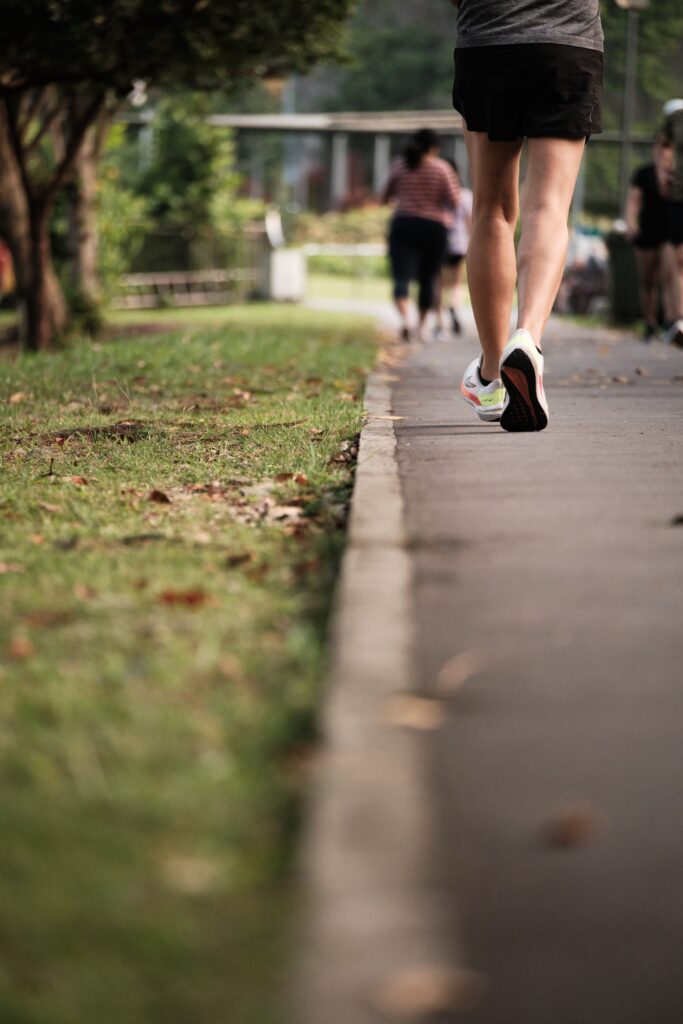
Choosing the right exercise matters because the best workout is the one you can repeat.
A workout that burns more calories but makes you quit after one week is not helpful.
A simple walking routine you repeat for months can be much more useful.
That is why walking vs running for weight loss is not only about calories.
It is also about:
- Consistency
- Comfort
- Injury risk
- Recovery
- Time
- Motivation
- Fitness level
- Long-term habits
Mayo Clinic explains that walking can support weight loss because physical activity helps your body burn calories.
But walking works best when you do it regularly and support it with simple food habits.
Running can also help, but it is more demanding. Beginners may need more rest, better shoes, and a slower build-up.
So the real question is not:
“Which one is harder?”
The better question is:
“Which one can I do consistently without burning out?”
When comparing walking vs running for weight loss, consistency is often more important than intensity.
Walking vs Running for Weight Loss: 7 Key Differences
1. Walking Is Easier to Start
Walking is one of the easiest ways to begin moving more.
You do not need special training.
You do not need to learn technique.
You do not need to feel athletic.
You can start with:
- 10 minutes
- A comfortable pace
- A safe route
- Supportive shoes
- A simple weekly goal
That is why walking is usually better for complete beginners.
If you are comparing walking vs running for weight loss, walking wins for ease.
Beginner walking example
| Day | Goal |
|---|---|
| Monday | 10-minute walk |
| Tuesday | 15-minute walk |
| Wednesday | Rest |
| Thursday | 15-minute walk |
| Friday | 10-minute walk |
| Saturday | 20-minute walk |
| Sunday | Rest |
This feels simple.
And simple routines are easier to keep.
If you are completely new, start with this guide on walking for weight loss for beginners.
2. Running Burns More Energy in Less Time
Running is harder than walking.
Because it is more intense, it usually burns more energy in less time.
That can make running attractive for people who want shorter workouts.
But there is a catch.
Running may feel too hard if your body is not ready.
If running makes you sore, tired, or discouraged, you may stop completely.
That is why running is not always better for beginners.
Running may look stronger in the walking vs running for weight loss debate, but it is not always easier to maintain.
Walking vs running time comparison
| Goal | Walking Option | Running Option |
|---|---|---|
| Easy start | 10–20 minutes walking | May feel too hard |
| Time-saving | Needs more minutes | Usually needs less time |
| Beginner comfort | Usually easier | Usually harder |
| Recovery | Easier for most people | May need more rest |
For walking vs running for weight loss, running may be faster per minute, but walking may be easier to repeat weekly.
That matters a lot.
3. Walking Is Lower Impact
Walking is lower impact than running.
That means it usually feels easier on the knees, hips, ankles, and feet.
This does not mean walking has zero risk.
But for many beginners, walking is more comfortable than running.
Running has more impact because both feet leave the ground and land again with more force.
That is why running may feel harder if you are new, overweight, returning after a break, or dealing with joint discomfort.
Low-impact comparison
| Factor | Walking | Running |
|---|---|---|
| Joint impact | Lower | Higher |
| Recovery need | Usually lower | Usually higher |
| Beginner comfort | Easier | Harder |
| Risk of doing too much | Lower | Higher if rushed |
For beginners, this is one of the biggest reasons walking is a smart first step.
You can build stamina first.
Then decide later if running makes sense.
4. Running Needs a Slower Build-Up
Running should not be rushed.
If you go from no exercise to running every day, your body may not handle it well.
A better method is to use walk-run intervals.
This means you mix short running periods with walking recovery.
The NHS Couch to 5K plan is designed to help beginners ease into running at a comfortable pace.
That is important.
You do not need to start by running nonstop.
Beginner walk-run example
| Time | What to Do |
|---|---|
| 0–5 minutes | Easy walk warm-up |
| 5–6 minutes | Light jog |
| 6–8 minutes | Walk |
| 8–9 minutes | Light jog |
| 9–11 minutes | Walk |
| 11–12 minutes | Light jog |
| 12–20 minutes | Easy walk |
This is much safer than forcing a long run on day one.
When thinking about walking vs running for weight loss, remember that running can help, but only if you build it slowly.
5. Walking May Be Easier to Do More Often
Many people can walk more often than they can run.
You may be able to walk:
- In the morning
- After dinner
- During lunch
- On a treadmill
- On recovery days
- While taking calls
- With a friend
- Around your neighborhood
Running usually needs more preparation.
You may need:
- More energy
- Better shoes
- More recovery
- A safe route
- More motivation
- More time to cool down
This is why walking can be powerful for beginners.
Even if walking is less intense, you may do it more often.
And weight loss support depends heavily on consistency.
Weekly routine comparison
| Routine Type | Example |
|---|---|
| Walking routine | 30 minutes, 5 days/week |
| Running routine | 20 minutes, 2–3 days/week |
| Mixed routine | Walk 4 days, run-walk 1–2 days |
If you want a simple weekly structure, follow this 7-day walking plan for weight loss for beginners.
6. Running May Increase Hunger for Some Beginners
Harder workouts can sometimes make people feel hungrier.
This does not happen to everyone.
But some beginners run, feel exhausted, then eat more afterward.
That can slow weight loss progress.
Walking may feel easier to manage because it is less intense.
You may finish a walk feeling refreshed instead of very hungry.
This is one reason walking can be helpful for beginners who struggle with overeating after exercise.
After-workout habit check
| After Exercise | Helpful Habit |
|---|---|
| Very hungry | Eat a balanced meal |
| Want a sugary drink | Try water first |
| Craving snacks | Check if you are tired or hungry |
| Feeling exhausted | Reduce intensity next time |
| Feeling good | Repeat the routine |
For walking vs running for weight loss, food habits still matter.
Running does not cancel out overeating.
Walking also does not work well if every walk turns into a large reward meal.
7. The Best Option Is the One You Can Repeat
This is the most important point.
Walking and running both work only if you keep doing them.
If running makes you feel strong and you recover well, it can be useful.
If running feels stressful, walking is a better choice.
If walking feels too easy, you can make it more effective with pace, time, hills, or treadmill incline.
Best choice by beginner type
| Your Situation | Better Choice |
|---|---|
| Completely new to exercise | Walking |
| Joint discomfort | Walking |
| Short on time but already fit | Running or walk-run |
| Hate running | Walking |
| Want indoor control | Treadmill walking |
| Want higher intensity later | Walk-run method |
| Need low-pressure routine | Walking |
The winner in walking vs running for weight loss is not the same for everyone.
For most beginners, walking first is the smarter plan.
Running can come later.
Walking vs Running: Which Burns More Calories?
Running usually burns more calories per minute than walking because it is more intense.
But total calories depend on:
- Body weight
- Speed
- Distance
- Time
- Terrain
- Incline
- Fitness level
- Effort
Walking for 45 minutes may be easier for some beginners than running for 15 minutes.
So instead of only asking which burns more per minute, ask:
Which one can I do regularly?
Simple calorie-burn idea
| Exercise Style | Main Benefit | Beginner Reality |
|---|---|---|
| Walking longer | Easier to repeat | Takes more time |
| Running shorter | Higher intensity | Harder to recover from |
| Brisk walking | Good middle option | Great for beginners |
| Walk-run intervals | Builds running slowly | Needs patience |
If your goal is steady progress, brisk walking can be a great middle point.
It is harder than slow walking but easier than running.
Is Walking Enough for Weight Loss?
Yes, walking can be enough for weight loss support when your routine is consistent and your food habits support your goal.
But walking may not work well if:
- You walk rarely
- Walks are too short
- Pace is always very easy
- You sit all day after walking
- You overeat after walks
- You expect fast results
If you are walking regularly but stuck, read this guide on walking but not losing weight.
Walking works best when you slowly improve your routine.
You can increase:
- Walking time
- Walking pace
- Weekly walking days
- Step count
- Incline
- Brisk intervals
You do not need to run to make progress.
But you do need consistency.
Is Running Better for Weight Loss?
Running can be better for some people because it is more intense and may save time.
But it is not automatically better for beginners.
Running may not be best if:
- You hate it
- You feel pain
- You cannot recover well
- You quit after a few attempts
- It makes you very hungry
- You feel pressured or stressed
A good running routine should feel challenging but safe.
If you want to try running, start with walk-run intervals.
Do not jump into running every day.
Safe beginner running approach
| Week | Goal |
|---|---|
| Week 1 | Mostly walking, short jogs |
| Week 2 | Slightly longer jogs |
| Week 3 | More walk-run intervals |
| Week 4 | Build slowly if comfortable |
Running can be helpful, but only if your body is ready.
Walking First, Running Later: A Smart Beginner Plan
For many beginners, the best plan is not walking or running.
It is walking first, then adding running later.
This helps your body build a base.
A smart approach to walking vs running for weight loss is to start with walking first, then add running only when your body feels ready.
4-Week Walking First Plan
| Week | Plan | Goal |
|---|---|---|
| Week 1 | Walk 10–20 minutes | Build habit |
| Week 2 | Walk 20–25 minutes | Improve stamina |
| Week 3 | Walk 30 minutes | Build consistency |
| Week 4 | Add short brisk intervals | Prepare for running |
After that, you can try short jog intervals if you want.
But you do not have to.
Walking alone can still be your main weight loss support habit.
If you want a structured walk, try this 30-minute walking workout for beginners.
Best Weekly Plan: Walking vs Running for Weight Loss
Here is a simple beginner-friendly weekly plan.
This plan starts with walking and slowly adds optional running.
Beginner Weekly Plan
| Day | Workout | Intensity |
|---|---|---|
| Monday | 25-minute walk | Easy |
| Tuesday | Rest or light walk | Recovery |
| Wednesday | 30-minute brisk walk | Moderate |
| Thursday | Rest | Recovery |
| Friday | 20-minute walk-run intervals | Gentle challenge |
| Saturday | 30-minute walk | Comfortable |
| Sunday | 15-minute relaxed walk | Easy |
If running feels too hard, replace Friday with another walk.
You do not need to force running.
A walking-only version can also work.
Walking-only weekly plan
| Day | Workout |
|---|---|
| Monday | 20-minute walk |
| Tuesday | 30-minute walk |
| Wednesday | Rest |
| Thursday | 30-minute brisk walk |
| Friday | 15-minute easy walk |
| Saturday | 30-minute walk |
| Sunday | Rest |
This plan is simple and realistic.
Treadmill Walking vs Treadmill Running
A treadmill gives you control over speed and incline.
This makes it useful for both walking and running.
For beginners, treadmill walking is usually easier.
You can start with:
- 0% incline
- Easy speed
- 10–20 minutes
- Slow warm-up
- Slow cool down
If you want more effort, add light incline before running.
Incline walking can feel challenging without the impact of running.
Treadmill comparison
| Option | Best For | Beginner Tip |
|---|---|---|
| Treadmill walking | Indoor routine | Start easy |
| Incline walking | More effort without running | Add low incline slowly |
| Treadmill running | Higher intensity | Use only when ready |
| Walk-run treadmill | Safe transition | Alternate short jogs and walking |
If you prefer indoor walking, read this guide on treadmill walking for weight loss.
Morning Walking vs Running
Morning exercise can be helpful because you finish it early.
But your body may feel stiff after sleep.
For beginners, a morning walk is often easier than a morning run.
A good morning plan:
- Start with 5 minutes easy walking
- Build to 10–20 minutes
- Add brisk walking later
- Try running only when walking feels easy
If mornings fit your routine, read this guide on morning walk for weight loss.
Morning walking can be a strong habit because it reduces excuses later in the day.
Walking or Running After Dinner?
After dinner, walking is usually the better choice.
Running soon after a heavy meal may feel uncomfortable.
A gentle walk is easier.
It can help you add movement in the evening without pushing too hard.
After-dinner comparison
| Option | Beginner Advice |
|---|---|
| Slow walk | Good after heavy meals |
| Easy walk | Best for most evenings |
| Brisk walk | Use only if comfortable |
| Running | Usually not ideal right after dinner |
For after-dinner movement, comfort matters more than intensity.
If evenings work better for your schedule, read this guide on walking after dinner for weight loss.
Common Mistakes Beginners Make
Mistake 1: Choosing Running Too Early
Running may look like the faster choice, but it is not always the right first step.
If you are new, start with walking.
One common mistake in walking vs running for weight loss is choosing running too early and quitting because it feels too hard.
Mistake 2: Thinking Walking Is Too Easy to Work
Walking can work when done consistently.
Do not ignore it just because it feels simple.
Mistake 3: Running Too Fast
Beginner running should feel controlled.
If you cannot speak in short phrases, slow down.
Mistake 4: Not Resting
Running needs recovery.
Even walking routines can include rest days.
Mistake 5: Eating More Because You Exercised
Exercise helps, but food habits still matter.
Do not turn every workout into a reason for extra snacks.
Mistake 6: Only Checking the Scale
Also track:
- Energy
- Walking time
- Running intervals
- Step count
- Stamina
- Clothes fit
- Mood
- Sleep
Progress can show in more than one way.
What to Eat and Drink With Walking or Running
You do not need a strict diet to begin.
But balanced meals help support your exercise routine.
Simple Food Habits
- Eat protein with meals
- Add vegetables when possible
- Choose water more often
- Reduce sugary drinks
- Keep snacks simple
- Avoid overeating after workouts
- Eat slowly
- Build meals that keep you full
Simple Plate Method
| Plate Section | What to Add |
|---|---|
| Half plate | Vegetables or salad |
| Quarter plate | Protein like eggs, chicken, fish, beans, tofu, or Greek yogurt |
| Quarter plate | Rice, potatoes, oats, bread, or fruit |
| Small amount | Nuts, avocado, olive oil, or seeds |
Before longer walks or runs, use this water intake calculator to estimate your daily hydration needs.
Safety Tips Before You Start
Walking is beginner-friendly, but safety still matters.
Running needs even more care because it is higher impact.
Simple Safety Tips
- Start with walking first
- Warm up slowly
- Wear comfortable shoes
- Avoid increasing too quickly
- Use rest days
- Stop if you feel pain
- Avoid running hard after heavy meals
- Stay hydrated
- Choose safe routes
- Build slowly
If you feel chest pain, dizziness, unusual shortness of breath, or strong discomfort, stop and speak with a healthcare professional.
This article is general wellness information, not personal medical advice.
Final Verdict: Which Is Better for Beginners?
When comparing walking vs running for weight loss, walking is usually better for beginners.
It is easier to start.
It is lower impact.
It is easier to repeat.
It needs less recovery.
It feels less intimidating.
Running can be useful later, especially if you enjoy it and your body handles it well.
The best answer to walking vs running for weight loss is the option you can follow consistently without feeling burned out.
But you do not need to run to begin losing weight.
Start with walking.
Build your time.
Add brisk pace.
Try intervals.
Then decide if running belongs in your routine.
The best workout is not the hardest one.
It is the one you can repeat.
For most beginners, that starts with walking.